Case study · Ontario ABA therapy
A website that feels like a deep breath.
Therapy Ahead is a new Ontario company offering individualized, neuro-affirming ABA therapy. The parents who find it arrive tired and full of questions. The site’s job was to be the first calm answer, and an easy way to say hello.
- Pages, ABA Therapy before Services
- 6
- Communities served
- 6
- Steps to start
- 3
- Blog, with its own editor
- 1
no waitlistthe client’s own words
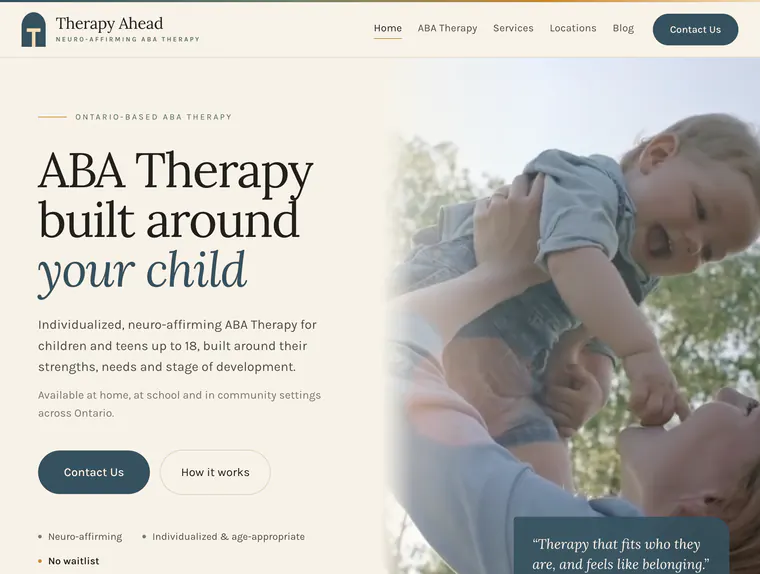
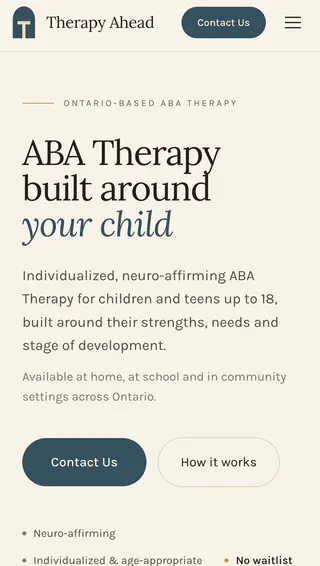
01 · Listening first
Before any design, a long conversation.
Manroz started Therapy Ahead for children and teens up to eighteen, supported at home, at school and in the community. Her brief was specific about tone: warm, individualized, respectful, and never a clinic poster.
Parents are the audience, and they are reading at the end of a long day. So the site was shaped around what they search for and what they fear, not around a template.
listen first, then build
What Manroz asked for, and what we did
“Put ABA Therapy before Services.”
Parents search for the first word, not the second. The menu runs Home, ABA Therapy, Services, Locations, Blog, Contact.
“No separate About page.”
Who they are, how they work and what to expect all live on the homepage, where a worried parent is already reading.
“Don’t frame it as treating diagnoses.”
The copy says every child arrives with a different story, whether or not they have a diagnosis, and that no child is asked to be someone else.
“A simple contact form.”
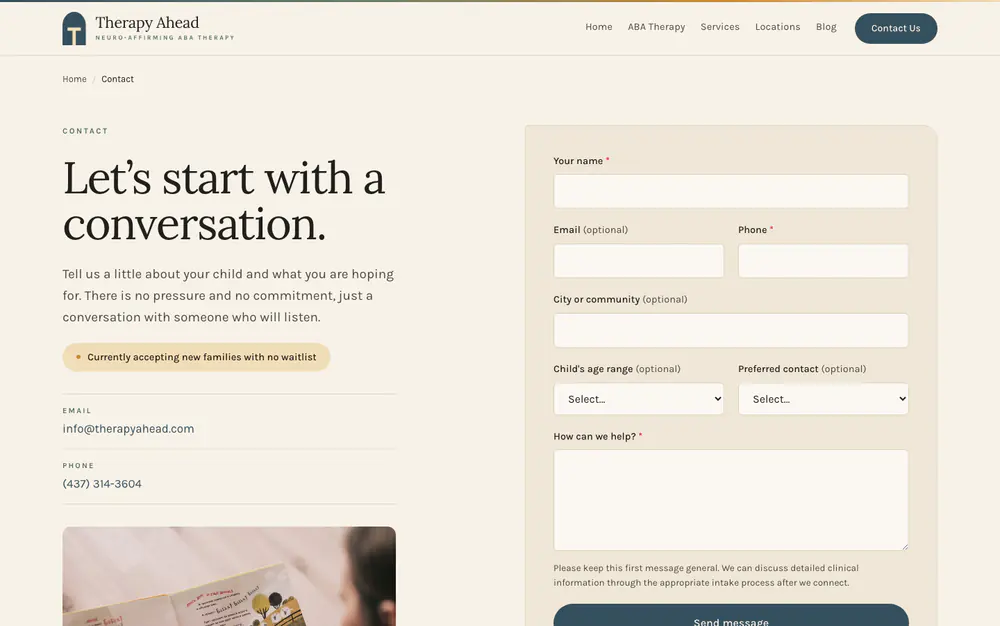
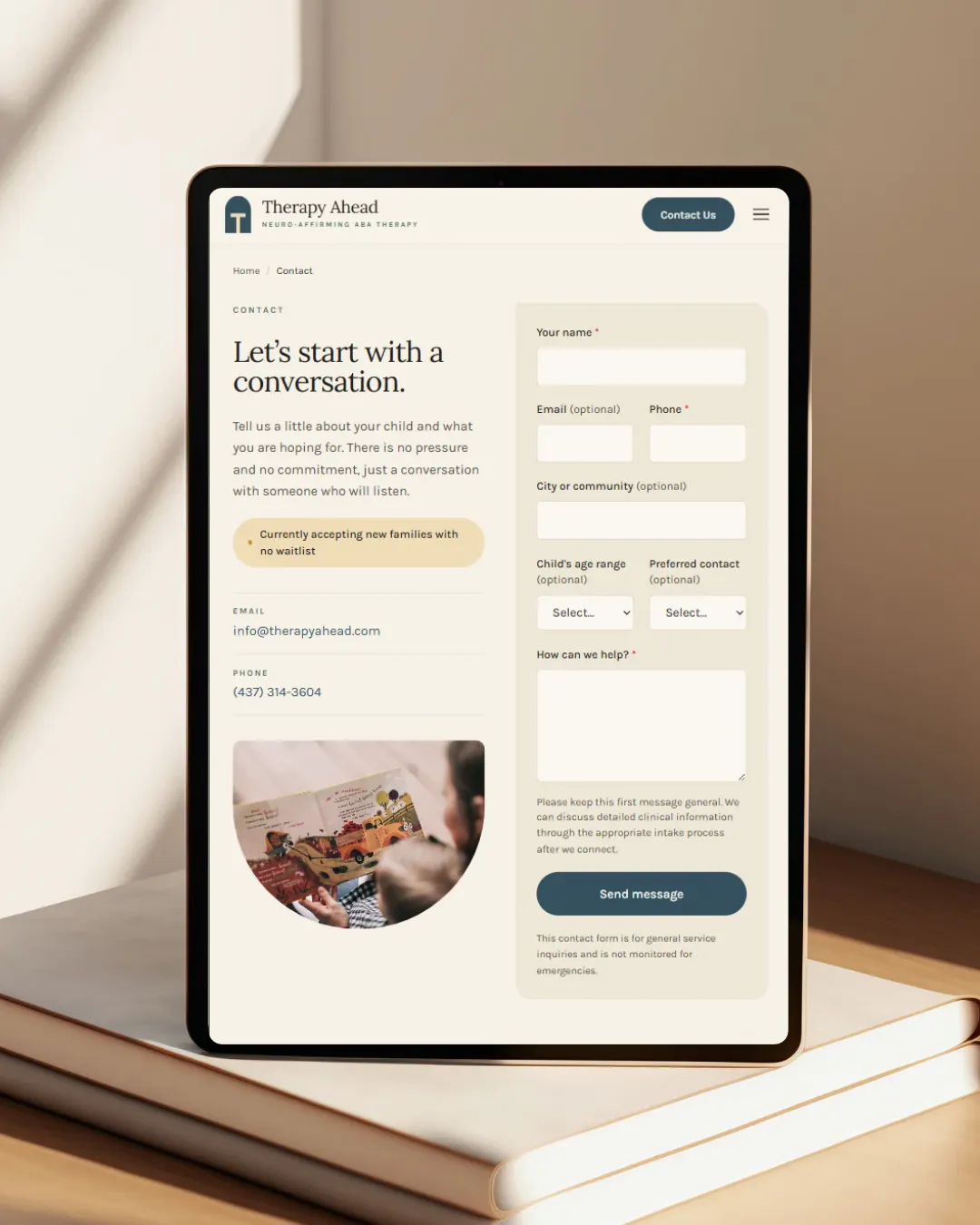
Two ways to be reached, one required. After sending, the form is replaced by a quiet thank-you.
Held back, on purpose
What the site does not say yet.
A new practice should not claim what it cannot yet show. These stay off the site until the client confirms them, so every sentence on it is one she is happy to stand behind.
- Staff names
- Credentials and registration claims
- Funding-provider status
- Hours and an office address
- Testimonials
- Response-time promises
02 · Three steps
Three steps, and we walk them with you.
The whole site is arranged around the journey a family takes. Each step has a page behind it, and each page has one clear next thing to do.
- 1
Reach out
One short form for a relaxed conversation about the child. A name, a message and either an email or a phone number: nothing more is required.
What we builtA contact form that sends two separate emails, one to each inbox.
- 2
Find the right therapy team
The family is matched with a therapist and a supervising team, then introduced. The match matters as much as the method.
What we builtServices and Locations pages that explain the options and where therapy can happen.
- 3
Start therapy
Sessions begin in the chosen setting, with goals reviewed as the child's needs change.
What we builtAn ABA Therapy page, written for parents before it is written for anyone else.
03 · Where it happens
Therapy happens where life happens.
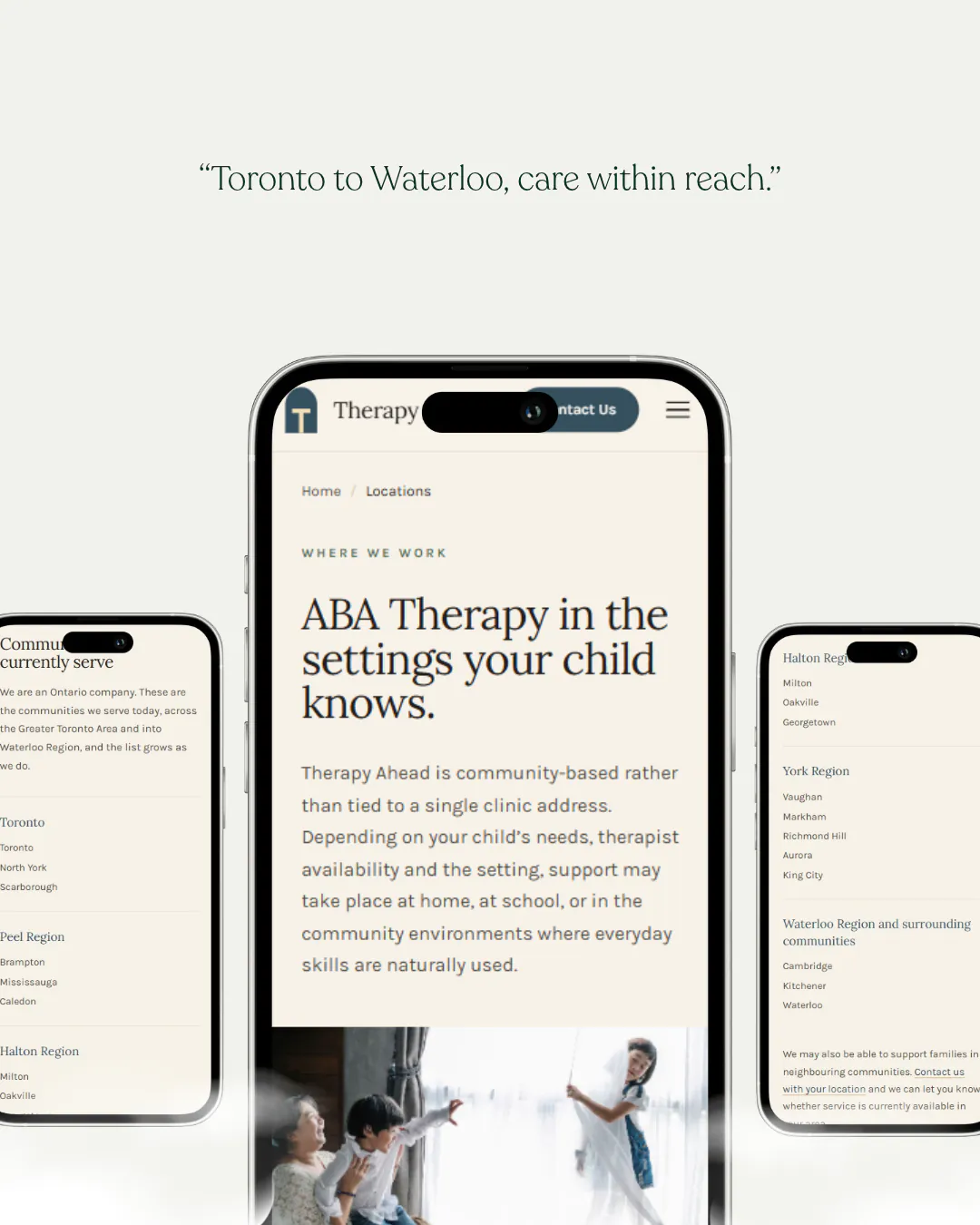
Not in a clinic waiting room: at home, at school, in the community. The Locations page says so, and so does a small switch you can try.
the living room floor
Therapy in the place a child already knows best, with the people who know them best close by, and routines that are really theirs.
Communities currently served
- Toronto
- Mississauga
- Brampton
- Vaughan
- Richmond Hill
- Kitchener-Waterloo
the living room floor
04 · Read it slowly
The homepage, top to bottom.
A long page that never feels long: short sections, one idea each, and a change of colour whenever the subject changes. Scroll it, laptop and phone together.
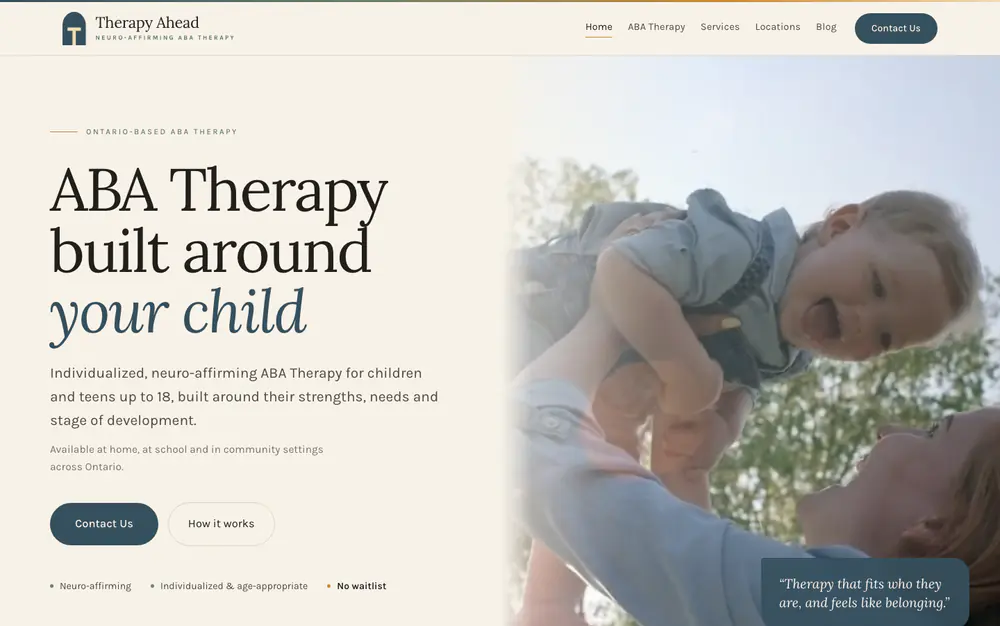
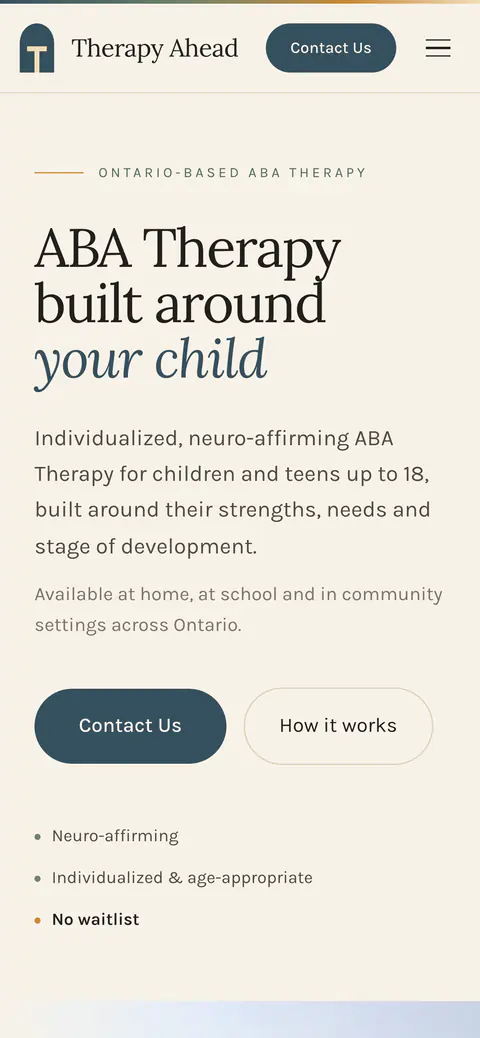
Page 01
ABA Therapy built around your child
What it is, who it is for and where, in a family's own terms, with “No waitlist” just beneath.
Page 02
We start by understanding the child in front of us
An arch of a photograph and a plain promise: your child is never asked to be someone else.
Page 03
Therapy that respects how your child is wired
A slate band slows the page down for the principles that matter most.
Page 04
Every child arrives with a different story
Autism, ADHD, OCD, developmental disabilities, communication, emotional regulation, daily living and social connection, listed plainly.
Page 05
Skills are learned where they are used
At home, at school and in the community, each with its own arch.
Page 06
The match matters as much as the method
Why a family is matched with a team, not simply assigned one.
Page 07
Three steps, and we walk them with you
Reach out, find the right team, start therapy. Then who will be working with your child, and an open invitation to talk.
05 · Behind the pages
Quiet on the surface, careful underneath.
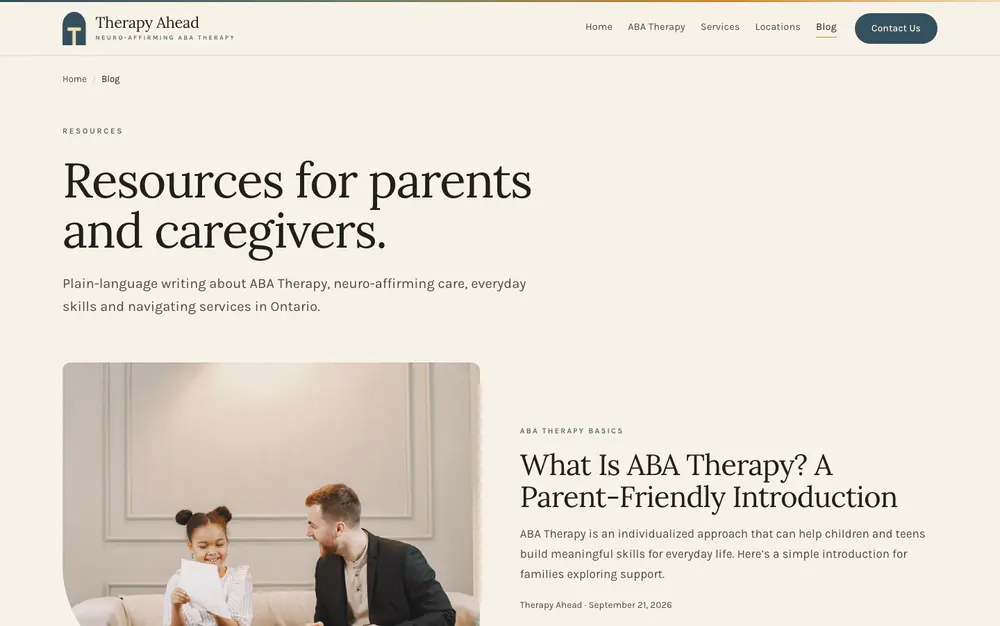
Parents see a calm site. The team sees a blog they can publish to and a form that never loses a message.
Built with
- TanStack Start
- React 19
- Tailwind CSS
- Postgres with row-level security
- Resend
- A blog with its own editor
- Parents read it at /blog. The team signs in to write, edit and publish, and a draft is invisible to the public until it is ready.
- Signed in is not enough
- Publishing needs a sign-in and a place on an approved list, enforced by the database itself. There is no password hidden in the page.
- A form that tells the truth
- Each enquiry becomes two separate emails, one per inbox, sent from the server so the key never reaches the browser. If sending fails, the visitor sees it.
- The plain pages, done properly
- A privacy policy and an accessibility statement sit in the footer, written for the people who need them.
06 · On the record
Shared the way families find us.
The launch went out on Instagram as a run of posts: a notebook and a phone, the funding page on a laptop, the contact form on a tablet, and the clips below.
Instagram · @vortioai
Follow the work
We post the builds behind the sites.
New launches, the thinking behind them, and what we are building next.
Follow @vortioai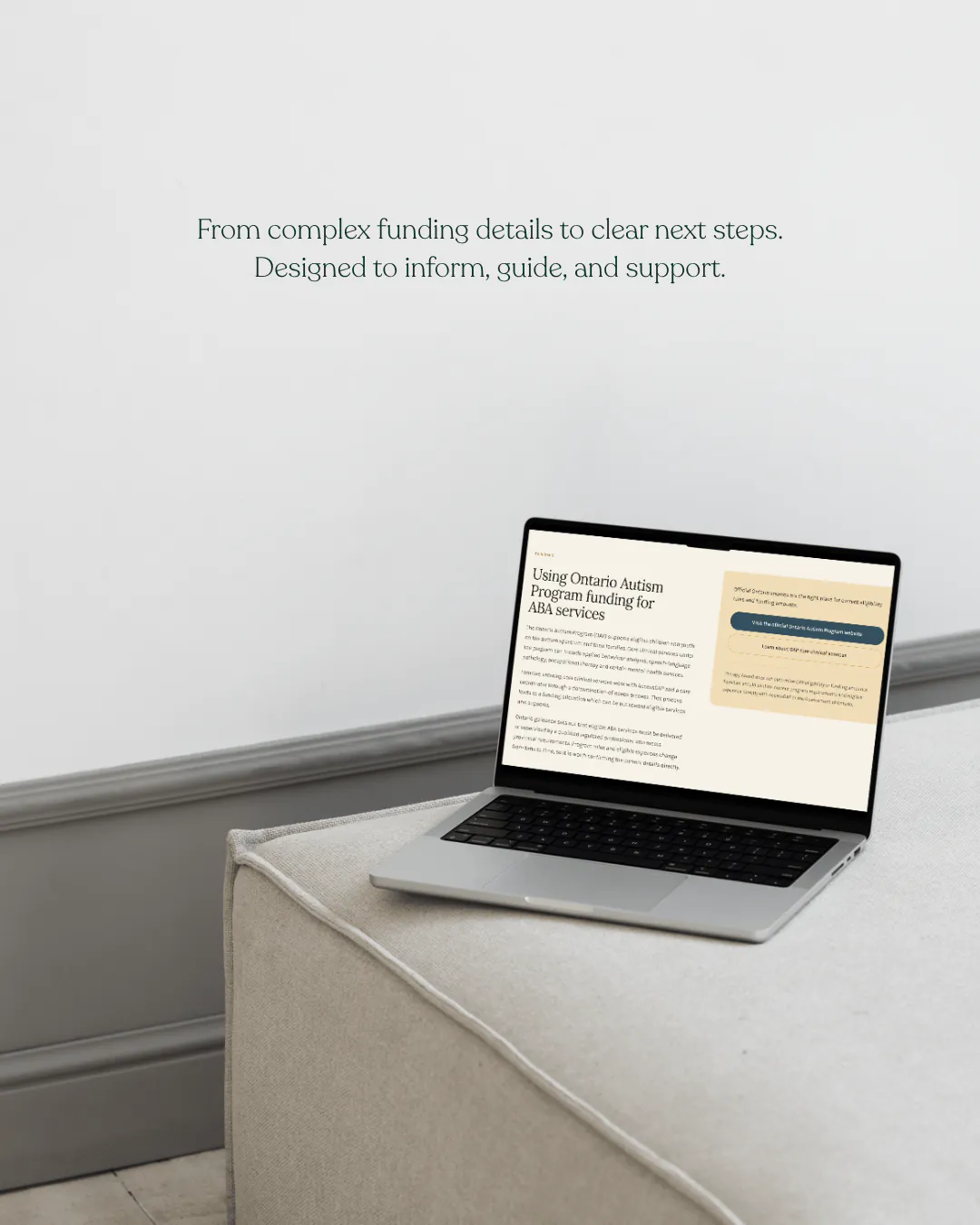
From the founder
“They helped turn my ideas into a website that looks modern, feels welcoming, and is easy for clients to navigate.”
Is your website as kind as your practice?
If the people who need you arrive worried, your site is the first thing they meet. Let’s make it a good first meeting.

Website design and build by Vortio
therapyahead.com